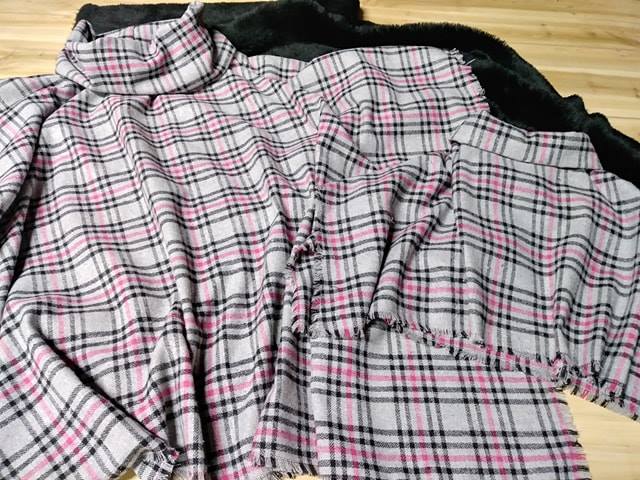
Software That Shows How Fabric Falls and Moves
Fabric behaviour is the hardest thing to sell in a photograph. A bias-cut Tencel panel cascading off the shoulder, a washed linen shift that holds its shape in 70 per cent humidity, a merino jersey that springs back after a hug — none of that survives a flat lay or a hanger shot. Aurora Design Fabrics supplies independent labels, costume departments and product teams from Sydney to Perth, and the question we hear most often is how to judge drape before anyone commits to metres of cloth.
The good news is that simulation has left the research lab. On a desk in a Melbourne studio, a designer can pin a pattern to a digital body, release gravity and watch a 280gsm cotton twill collapse into folds in seconds, then re-run the same panel in a heavier version of the same fabric. That shifts the economics of sampling: fewer muslin toiles burned through, fewer courier runs to a pattern room, and more hours actually spent on how the cloth sits.
Why Drape Simulation Matters in the Studio
Drape is the outcome of a handful of physical variables working together: fibre type, yarn twist, weave structure, areal weight, bending stiffness, friction, the shape of the body underneath and the air around it. Change one and the silhouette changes. Fine merino bounces away from the body, heavy canvas creases in knife folds, crisp poplin holds a wide flare, and a viscose blend drapes close and heavy with a fluid, almost liquid fall. Buyers feel these differences instantly, even when they cannot name them.
For years the only reliable method was the physical toile: drape the fabric on the stand, pin it, photograph it, walk it, repeat. That method still has value and should never be replaced wholesale. It also scales badly. Each iteration costs a machinist, an afternoon and a length of cloth, which is why many small Australian labels prototype in a single, compromised sample and hope for the best.
Simulation flips the ratio. A digital prototype can be re-run in minutes, from the same base pattern, with weight swapped or seam lines moved. It also creates documentation: a saved simulation file becomes a shared reference that a machinist in Ballarat or a factory offshore can open and read, rather than a photo in an email thread with ambiguous captions.
Inside the Cloth Simulation Engines
Most engines solve cloth behaviour with either mass-spring networks or position-based dynamics. Vertices are connected by distance constraints that hold the fabric together, bend constraints that resist folding, and self-collision rules that stop the cloth passing through itself. Gravity pulls down, the body underneath pushes back, and the solver iterates until the fabric settles. Some packages run this in real time for animation; others precompute the simulation and then play it back, which is why a heavy drape can be rendered overnight while a lighter one appears instantly.
The visual quality depends entirely on the fabric data you feed in. Bending stiffness, weight, stretch along warp and weft, and surface friction determine whether a skirt swings, tents or slumps. Textures and normal maps add the visual grain of a twill or a slubby linen, and increasingly the platforms ship measured values for real cloth. Before going deep into any of that, it helps to have the fundamentals of cut, grain and bias clear in your head; the pattern-making notes at Isishi pattern tutorials are a useful primer for anyone moving from hand draping into software.
The limitation worth remembering: a simulation can only be as accurate as the properties you assign it. Guess the friction value and you will get a convincing-looking result that does not match the cloth on your cutting table.
Dressing Bodies and Real Bodies
Simulation becomes useful when it is anchored to a real person. Most tools include generic avatars, but a studio's work improves once you build an avatar from a fit model: measure bust, waist, hip, shoulder and height, adjust the mesh, and confirm the digital figure matches the person the garment is actually made for. Australian brands increasingly use national body measurement data and updated size charts for this step, and size sets built for an earlier era of fitting assumptions translate poorly into current patterns.
A second anchor is calibration. Take one swatch in a fabric you know well, drape it physically, capture a straight-on and a profile photograph, then tune the digital fabric until the two silhouettes match. Once that one calibration is right, the same settings usually hold for other fabrics of similar construction, which makes the effort worthwhile across a whole range.
The fabric supplier becomes the third anchor, and this is where the conversation usually moves to us. When a spec sheet lists weight in grams per square metre, composition, stretch and a hand feel, that is not enough for simulation. What genuinely helps is data like a measured drape coefficient, a bending or shear measurement, and a note on whether the cloth has been washed, sanforised or finished. Tech packs carrying that information let a designer start with a plausible cloth rather than an optimistic guess.
Climate, Standards and the Australian Market
Local conditions shape what a preview has to survive. Sydney's humid January afternoons and Melbourne's four-seasons-in-a-day weeks produce very different expectations from a buyer. Summerweight linen, Tencel and lightweight cotton are asked about constantly in Queensland and the northern beaches, while workwear and outerwear ranges sold through rural retailers need to hold shape through wind and dust. Swim and surf labels around Bondi, Cottesloe and Noosa also care about recovery after chlorine and salt water, which changes drape over a season, not just on the cutting table.
Standards and law add a second layer. Textile and apparel products sold here fall under the Australian Consumer Law and are administered through state and territory fair trading bodies, with fibre content and care labelling expected to be accurate and consistent with the relevant AS/NZS textile standards. Environmental and welfare claims need their own evidence: mulesing restrictions have moved into legislation in New South Wales and the ACT, so a wool description that carries an ethical sourcing claim must be supportable rather than decorative.
The commercial pressure runs the other way too. Australian consumers now meet aggressive online pricing from offshore fast fashion alongside a strong culture of op shops, resale and buying Australian, which means a local label has to justify its price through drape and construction rather than through volume. Many studios, students at RMIT and TAFE fashion programs and small clothing brands are running on software they learned on, so the affordable entry points matter here more than in larger markets.
A Shortlist and a Checklist for Small Studios
A workable setup for most Australian designers starts with one core platform and one supplementary tool.
Tools worth a trial:
- CLO Virtual Fashion — strong when a client expects a rendered tech pack rather than a flat pattern.
- Marvelous Designer — strong for pattern-first workflows, unlimited edits and students on a budget.
- Blender with cloth modifiers — free, and the right choice for dance, installation or film work.
- TexCloth or DA-CLO — narrow but precise tools for benchmarking a single fabric's drape.
- Avatar and fabric calibration add-ons — worth adding to whatever base package you already run.
Checks before you trust a preview:
- Match weight, composition and stretch to the physical swatch, not to the mill's description.
- Confirm grain lines, seam allowances and ease against your own pattern.
- Run one panel as a real toile and compare silhouettes side by side.
- Account for washing and shrinkage, both of which alter how the cloth falls.
- Test the preview at Australian humidity, where light fabrics behave differently.
Comparing Platforms and Taking the Next Step
A side-by-side comparison of the most-used platforms:
| Tool | Strongest use | Drape realism | Cost and access | Fit for Australian studios |
|---|---|---|---|---|
| CLO Virtual Fashion | Rendered tech packs and brand mock-ups | High, with calibrated fabric presets | Subscription, paid per seat | Good for labels needing client-ready packs fast |
| Marvelous Designer | Pattern-first design and repeat edits | Very high on bias cuts and stretch | One-off purchase | Strong value for small studios and students |
| Browzwear VStitcher | Fit across large size runs | Moderate to high | Licence tied to production volume | Useful for e-commerce ranges and scaling |
| Blender and cloth tools | Custom visualisation and movement | Moderate, tunable but steep to learn | Free, hardware dependent | Ideal for motion studies, film and installation |
| TexCloth and DA-CLO | Single-fabric drape benchmarking | High for technical measurement | Specialist licences | Best for mills and fabric suppliers |
The pattern that shows up across Australian studios is a hybrid one: simulation for speed, physical toiling for truth. Use a tool to narrow a range down to two or three candidates, then drape those on a stand before sign-off. That sequence keeps the cost of sampling down without handing a client a garment that only works on screen.
If you are building a range and want previews that reflect your actual cloth, request drape data and measured properties with your swatch order from Aurora Design Fabrics. Send us your fabric weights, your patterns and the silhouettes you are chasing, and we will match you with weights and constructions that behave the way you intend, backed by a swatch pack you can drape on a stand before a single metre is cut.